
If you need to move several hundred boxes of business records from your current archive provider without losing track of individual files, UK providers that publish a managed transfer service include Restore Information Management, Secure Data Management and Dajon Data Management. Each will collect your boxes from your current supplier and log them into its own system. What protects individual files is less the choice of provider than how the move is run: An inventory exported before anything moves, a manifest for every collection, every box checked in against that manifest on arrival, and a decision about whether to re-index at file level while the boxes are open.
This article is written by Dajon, one of the providers listed. We have only included what each company publishes on its own website, listed the other providers alphabetically with our own entry last, and linked to every source. Details were checked in November 2026, so confirm current terms with each provider.
Where files go missing in an archive move
Boxes rarely disappear in transit. Files get lost in the paperwork around the move:
- The old index doesn’t come with you: If your current provider holds the only list of what is in each box, and you don’t export it first, your new provider starts with box numbers and nothing else.
- Box-level indexing hides file-level gaps: A box can arrive safely while a file that was recalled two years ago and never refiled is still missing from it. Nobody notices until someone asks for it.
- Collections aren’t reconciled: Without a manifest checked at both ends, a short delivery looks the same as a complete one.
- Access stops during the move: If boxes are in transit or unindexed for weeks, urgent requests can’t be met, and staff start keeping files back in the office.
A well-run migration is designed to close each of these gaps.
How a well-run archive migration works
1. Before anything moves
Start with your current contract. Check the notice period, the retrieval and permanent withdrawal charges that will apply to every box, and any early termination terms. Iron Mountain’s own guide to switching vendors notes that your final invoice is likely to include retrieval and removal fees, and that outstanding fees usually need to be paid in full before you can switch[1].
Then request a full inventory export from your current provider: Every box number, barcode, description, date range and any file-level entries. This is the baseline the whole move will be reconciled against. Agree with your new provider which index fields you want to keep and which you want to add, such as client reference, department or destruction date.
Your new provider will be handling your records, so put a written contract in place with it before collection. Under UK GDPR, a written contract is required whenever a controller uses a processor[2].
2. Collection
Most new providers will deal with your old supplier directly once you have given them authority to do so. Collections should run in planned batches, each with a manifest listing the boxes it contains, signed at handover. Ask how urgent requests will be handled during the move, and keep a short list of high-priority boxes that should be collected and indexed first.
3. Check-in and reconciliation
Every box should be scanned in against the manifest and the original inventory as it arrives, with existing barcodes recorded so old references still work. At the end of each batch, you should receive a reconciliation report showing what was expected, what arrived and any exceptions, such as missing, damaged or unlisted boxes. Exceptions need resolving with the old provider while the trail is fresh, not months later.
4. Re-indexing
This is the point at which a migration can leave you better off than before. Options range from keeping your existing box-level index, to opening every box and indexing each file. File-level indexing costs more upfront, but it means staff can request a single file, you can see exactly what you hold, and missing files are discovered now rather than when someone needs them.
Opening the boxes is also the cheapest time to apply your retention schedule. Records already past their destruction date can be securely destroyed instead of being paid for in a new contract, and files that are requested often can be scanned so they never need a physical retrieval again.
5. Sign-off
Close the migration with a final reconciliation against the original inventory, written confirmation from your old provider that nothing remains in its custody, and access to the new online inventory for the people who request files.
UK providers publishing an archive transfer service
Restore Information Management
Restore says that when you switch, you sign a Letter of Authority and it handles the process with your current provider, keeping boxes accessible throughout. Its first step for new customers is a “lift the lid” review of what is in each box and how long it should be kept. Boxes are tagged and tracked with a full audit trail, and Restore cites a law firm that moved 13,000 boxes in four months[3].
Secure Data Management
Secure Data Management offers to help terminate your contract with your current supplier and work directly with it on the move. It says it can collect up to 250 boxes a day, records your existing box numbers and barcodes against your new inventory and uploads items to its portal within 24 hours. It describes relocations as cost neutral[4].
Dajon Data Management
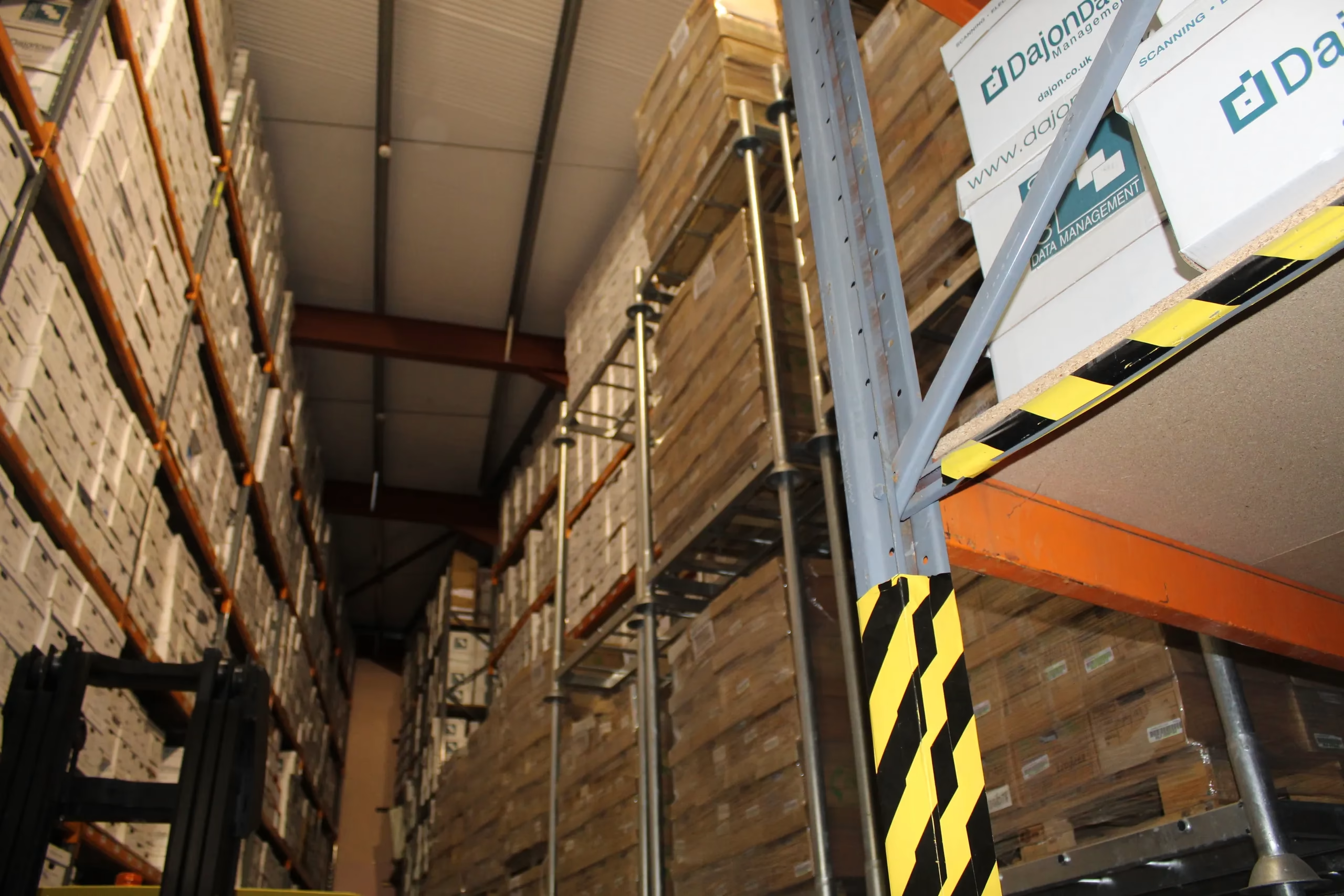
Dajon plans the move with you and barcodes every box as it arrives, so your inventory is complete from the first day. Boxes and files are barcoded and listed in an online system, inventory and indexing are set up around how you request files, and open-box storage lets individual folders be retrieved without recalling the whole box. Collections and deliveries use Dajon’s own vans and staff[5].
Questions to ask before you choose
- Who deals with our current provider? Ask whether the new provider handles notice, scheduling and collection, or whether that falls to you.
- How will you reconcile the move? Ask for an example manifest and reconciliation report, and how exceptions are handled.
- Will our existing references still work? Old barcodes and box numbers should stay searchable alongside the new ones.
- What indexing level do you recommend, and what does each cost? Get prices for box-level and file-level indexing so you can compare.
- How do we get files during the move? Ask about retrieval and scan on demand for boxes in transit or awaiting check-in.
- Who transports the boxes? The provider’s own vetted staff and vehicles, or a third party?
- What will it cost to leave you later? Check permanent withdrawal fees now, so this isn’t the last expensive move.
How Dajon helps
Dajon plans archive transfers with you and barcodes every box as it arrives, so your inventory is complete and you can see where any record is from the first day. Indexing is set up around how your staff actually request files, with open-box and open-file storage for folders you need individually. Collections use Dajon’s own vans and staff, and there are no permanent withdrawal fees if your needs change later.
Frequently asked questions
How long does it take to move several hundred archive boxes to a new provider?
For several hundred boxes, the physical collection can often be completed in days. The full migration, including notice to your current provider, reconciliation and any re-indexing, usually takes longer, and file-level indexing adds time in proportion to the number of files. Ask each provider for a timetable based on your box count and indexing level.
Do I have to pay my old provider to take my boxes away?
Often, yes. Contracts commonly include retrieval and permanent withdrawal charges, and outstanding fees may need to be settled before boxes are released. Check your contract and ask your current provider for a written quote for the full withdrawal before you agree a date.
Can I keep access to my files during the move?
You should be able to. Ask the new provider how retrieval and scan-on-demand requests will be handled for boxes in transit or awaiting check-in, and agree a priority list of boxes to move and index first.
What is the difference between box-level and file-level indexing?
Box-level indexing records what each box contains in general terms, so retrieving one document usually means recalling the whole box. File-level indexing records each file individually, so a single file can be found, requested and tracked on its own.
Should we re-index our archive when we change provider?
It is usually the best time to. The boxes are already being handled, so reviewing contents, applying your retention schedule and indexing at file level costs less than doing it as a separate project later.
If you are planning to move an archive from another provider, talk to Dajon about your box count, your current inventory and how your staff request files. You can also read our guide to UK document storage providers with more flexible pricing.
References
- How to switch document storage vendors Iron Mountain[↩]
- When is a contract needed and why is it important? ICO[↩]
- Switching information management partners Restore[↩]
- Switch to Secure Data Management Secure Data Management[↩]
- Document Storage Services in London Dajon[↩]