
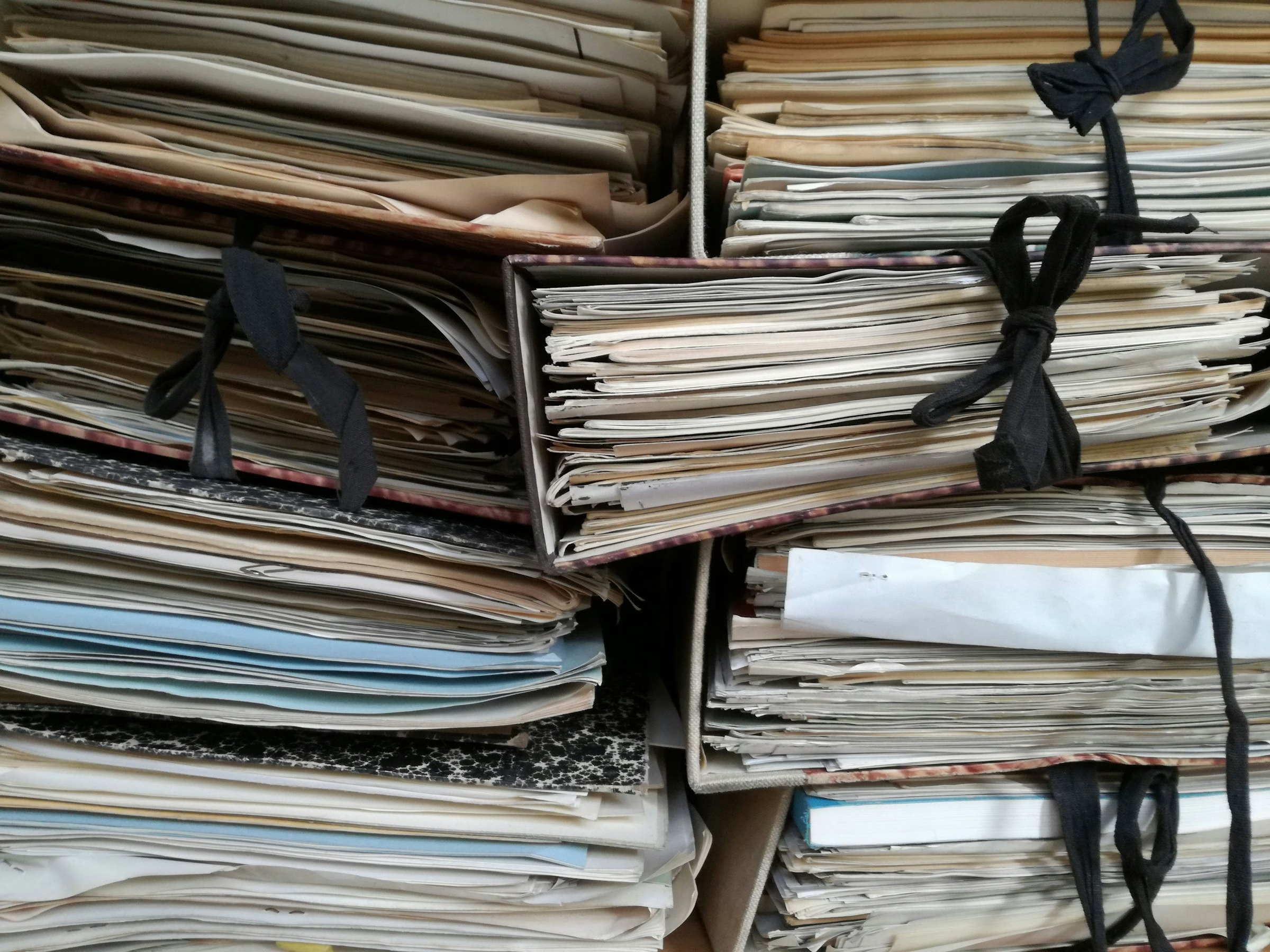
Somewhere in your building – perhaps a basement, a back office, or a rented storage unit – there’s a collection of boxes gathering dust. Inside them lie decades of company history: Faded photographs, handwritten memos, early product sketches, contracts signed by founders long retired. Most employees have never seen this material. Many don’t know it exists.
This is the business archive – and it may be one of the most undervalued assets your organisation owns.
The quiet revolution in business archives
Archives have traditionally been treated as passive repositories – places where old documents go to be forgotten. But a shift is underway. In an era defined by digital transformation, forward-thinking organisations are beginning to recognise their archives not as liabilities or relics, but as strategic resources capable of driving real business value.
This perspective is explored in depth by Frances Awele Okolo in her 2024 doctoral research at Loughborough University [1]. Her work makes a compelling case: When digitised and properly integrated into business operations, archives can support branding, compliance, innovation, and even revenue generation. They become, in her framing, digital capital rather than dusty overhead.
Why archives matter more than ever
Consider what a well-maintained archive actually contains. There’s the obvious material – financial records, contracts, regulatory filings – that supports legal and compliance functions. But there’s also a wealth of heritage content: Early advertising campaigns, executive correspondence, product prototypes, internal newsletters. This material tells the story of how an organisation came to be what it is.
In an age where consumers increasingly value authenticity and transparency, that story has tangible worth. Companies like Adidas and Coca-Cola have built entire marketing campaigns around archival material, drawing on their history to reinforce brand identity. For legacy organisations especially, archives offer what Okolo calls a “narrative backbone” – a way to demonstrate consistency, innovation, and evolution over time.
The value extends internally as well. HR teams can use historical material to illustrate company culture and support training programmes. Strategic planning benefits from access to past data and decision-making patterns. Legal departments gain rapid access to contracts and regulatory documents. R&D teams can revisit old prototypes and explore ideas that were ahead of their time.
The problem, of course, is that most of this material remains locked away in formats that make it effectively unusable. Paper documents in unlabelled boxes. Photographs without metadata. Files scattered across network drives with no consistent naming convention. The potential is there, but accessing it requires time, effort, and often a fair amount of luck.
What digitisation actually enables
Converting physical archives into structured digital assets changes everything. Search becomes instantaneous. Collaboration becomes possible. Materials that once required a trip to the storage room can be accessed from anywhere in the world.
Okolo’s research confirms what practitioners have long suspected: Digitised archives foster better collaboration across departments, improve records retrieval times, and support continuity during leadership transitions. When institutional knowledge is captured in accessible digital form, it doesn’t walk out the door when long-serving employees retire.
There are also significant gains in efficiency and cost reduction. Physical storage is expensive. Searching through boxes is time-consuming. Poor records management creates compliance risks, particularly in regulated industries or under frameworks like GDPR. Digitisation addresses all of these concerns while simultaneously making the archive more useful.
The COVID-19 pandemic offered a stark illustration of these benefits. Organisations with digitised archives adapted far more effectively to remote working, maintaining operations and meeting compliance requirements even with physical offices closed. Those relying solely on paper records found themselves at a serious disadvantage.
Perhaps most excitingly, digital archives can be integrated with modern technologies – Digital Asset Management Systems, Enterprise Content Management platforms, and increasingly, artificial intelligence. Automated tagging, sentiment analysis, and predictive analytics all become possible once materials exist in digital form. The archive stops being a static collection and becomes a dynamic resource.
The eight dimensions of transformation
Okolo’s research identifies eight key dimensions through which digital transformation reshapes archive management: Archival processes, technology, finance, leadership, customer interface, organisational integration, professional identity, and strategic alignment.
Each dimension presents both challenges and opportunities. The role of archivists themselves is evolving – they’re no longer simply custodians but digital stewards, responsible for data access, metadata quality, and supporting analytics. Leadership matters enormously: Senior executives who understand the strategic potential of archives are far more likely to fund and champion digitisation projects.
The critical factor, though, is strategic alignment. Digitisation efforts that operate in isolation rarely succeed. The most effective approaches link archive transformation directly to broader business goals – connecting preservation to performance, and treating the archive as part of the organisation’s decision-making infrastructure rather than a separate silo.
Confronting the barriers
Despite the clear benefits, many organisations delay or avoid digitisation altogether. Okolo’s research identifies several recurring obstacles: Perceived lack of value, concerns about cost, fear of exposure, and simple organisational inertia.
The fear of exposure deserves particular attention. Some organisations worry that digitising their archives will surface embarrassing or problematic material from the past. What if there are records of decisions that look questionable in hindsight? What if there’s evidence of practices that would be unacceptable today?
This concern, while understandable, is increasingly out of step with contemporary business culture. Transparency has become a competitive advantage. Several major corporations have voluntarily confronted difficult aspects of their history – whether related to environmental impact, labour practices, or corporate governance – as a way to build trust and demonstrate growth. Archives are essential to this process. They provide the evidence base for honest self-examination and the documentation of genuine change.
Financial hesitancy is another common barrier, but it often reflects a failure to account for the full picture. When weighed against the ongoing costs of inefficiency, the reputational risks of poor records management, and the lost opportunities from inaccessible heritage material, digitisation typically represents a modest and high-return investment.
What makes the difference, according to Okolo, is having a strategic champion within the organisation – someone who can articulate the archive’s value in terms that resonate across departments and secure the necessary support. Where such champions exist, digitisation projects are far more likely to succeed.
A question of mindset
Ultimately, the decision to digitise is less about technology than about perspective. It requires shifting from a defensive posture – viewing the archive as a necessary cost to be minimised – to an opportunity mindset that recognises archival material as strategic capital.
Organisations that make this shift position themselves to compete more intelligently, innovate more meaningfully, and communicate more authentically. They gain resilience, insight, and a powerful medium for connection with both internal and external audiences.
Imagine a future where marketing campaigns routinely begin with a search of the digital archive for inspiration and assets. Where AI models are trained on decades of internal reports. Where product development teams explore old prototypes for ideas worth revisiting. Where customers can engage with a brand’s history through immersive digital experiences.
This future isn’t speculative. It’s already emerging in organisations that have recognised what their archives are truly worth.
The question isn’t whether your organisation should digitise its archive. It’s how soon you can begin.
- Okolo, F. A. (2024). Exploiting Business Archives in the Era of Digital Transformation. Doctoral
Thesis, Loughborough University. https://doi.org/10.26174/thesis.lboro.26014354.v1[↩]